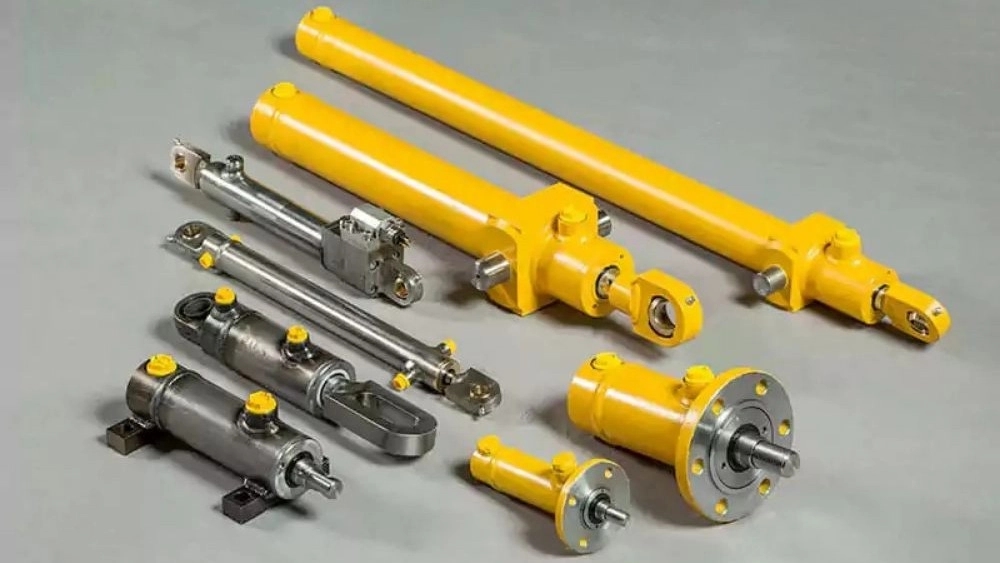
Hydraulic Jack
Hydraulic Jack
Hydraulic Jack is a mechanical device that works based on Pascal's Law; That is, the increase in pressure at one point of the incompressible fluid in a closed system is uniformly transferred to all other points. This principle causes a small force on a small surface to become a large force on a large surface at the output of the system. The main components of the hydraulic jack
1. Cylinder: Cylindrical chamber for piston movement and hydraulic oil storage. 2. Piston: A moving part that converts fluid energy into compressive mechanical force. 3. Valves: To control the entry, exit and direction of oil flow. 4. Oil pump (Pump): Pressure generation in hydraulic fluid. 5. Hydraulic oil (Hydraulic Fluid): Incompressible power transmitting fluid. 6. Reservoir: Oil storage and compensation for evaporation or leakage.
Types of hydraulic jack
1. Bottle Jack: common for cars and heavy industries; Vertical structure and high capacity. 2. Susmari Jack (Floor Jack): It is used in car repair and maintenance workshops; Fast horizontal movement. 3. Scissor Jack with Hydraulic Assist: Compact with scissor lifting mechanism and hydraulic assist. 4. Telescopic hydraulic jack (Telescopic Jack): includes several nested piston stages for high height in small space. 5. Industrial and construction jack (Industrial Hydraulic Jack): for lifting machines, structures and bridges with high tonnage.
---
Principles of operation
When the lever goes down, the pump creates the necessary pressure in the oil and causes the piston in the cylinder to rise. When the drain valve is released, the oil returns to the reservoir and the piston lowers.
Smooth, quiet and reliable operation is one of the main features of this system.
Materials and design specifications
- Body and cylinder: pressure-resistant alloy steel (AISI 1020 or 4140)
- Piston: chrome-plated steel to prevent corrosion.
- O-rings and seals: NBR, PU or Viton based on temperature and oil type.
- Working Pressure: Between 150 and 700 bar depending on the type of application.
- Design standards:
- ISO 10100 (Hydraulic systems)
- ASME B30.1 (Safety of lifts)
- FEM 5.001 (Mechanical performance of lifting equipment)
---
Advantages
- High power output with low input.
- Accurate and controllable performance.
- Easy maintenance and low energy requirement.
- Portability and use in limited environments.
- high safety against mechanical failure.
- Construction and bridge building industries.
- Oil, gas and petrochemical industries (for adjusting height and repairing heavy equipment).
- Rescue and relief systems (rescue jack). - Installation processes of heavy industrial equipment.
- If there is an oil leak, stop using it immediately.
- Place the jack on a flat and firm surface.
- At regular intervals, the oil level and the health of the O-rings should be checked.
- Never keep the jack under load without safety lock.
---
9. Conclusion
Hydraulic jack is known as one of the most widely used power transmission tools in modern industries. Correct design, compliance with safety principles, and choosing the right material of the components increase the lifespan, high efficiency and reliability in the performance of these equipments.

Shanderman Pars lift, production and sale of lift and hydraulic jack in Tehran